Historical Fort of Umm Al Quwain UAE

Umm Al Quwain Fort stands as one of the most evocative historical landmarks in the United Arab Emirates, embodying the heritage, resilience, and cultural identity of the emirate of Umm Al Quwain. Located in the old coastal quarter of the city, the fort rises with quiet dignity above its surroundings, its thick walls and watchtowers recalling a time when defense and governance were closely intertwined. Though modest in scale compared to some of the larger forts in the region, its historical importance and architectural character make it a treasured symbol of the emirate’s past.
Constructed in the late eighteenth century, Umm Al Quwain Fort was originally built as the residence of the ruling Al Mualla family and served as the seat of government. At a time when coastal settlements in the Gulf were vulnerable to tribal conflicts and maritime threats, fortified structures like this one were essential. The fort functioned not only as a defensive stronghold but also as an administrative center where political decisions were made and community matters were resolved. From within its walls, the leadership of the emirate guided trade, security, and daily governance, shaping the early development of Umm Al Quwain.
Architecturally, the fort reflects traditional Emirati building techniques adapted to the harsh desert and coastal climate. Its walls were constructed from coral stone and beach rock, materials readily available along the shoreline, and bonded with a mixture of lime and sand. The structure features a large central courtyard, a common element in Gulf architecture that provided ventilation, light, and a communal gathering space. Surrounding the courtyard are rooms that once served as living quarters, storage areas, and administrative offices. The design balances practicality with understated elegance, demonstrating how local builders used simple materials to create structures capable of enduring both time and weather.
One of the fort’s most striking features is its pair of defensive towers. These towers allowed guards to observe the surrounding land and sea, providing early warning of approaching visitors or potential threats. The elevated vantage points were crucial in an era before modern communication systems. From the towers, one can imagine watchmen scanning the horizon, their presence reinforcing the authority and protection offered by the ruling family. The towers also contribute to the fort’s distinctive silhouette, making it an instantly recognizable landmark within the old town area.
Over the years, the fort’s role evolved. In the twentieth century, as the emirate modernized and administrative functions moved to newer buildings, the fort was repurposed. For a period, it served as a police station and prison, continuing its association with authority and law. This adaptive reuse helped preserve the structure at a time when many historic buildings in the region faced neglect or demolition amid rapid urban development. Eventually, recognizing its cultural value, the authorities restored the fort and transformed it into a museum.
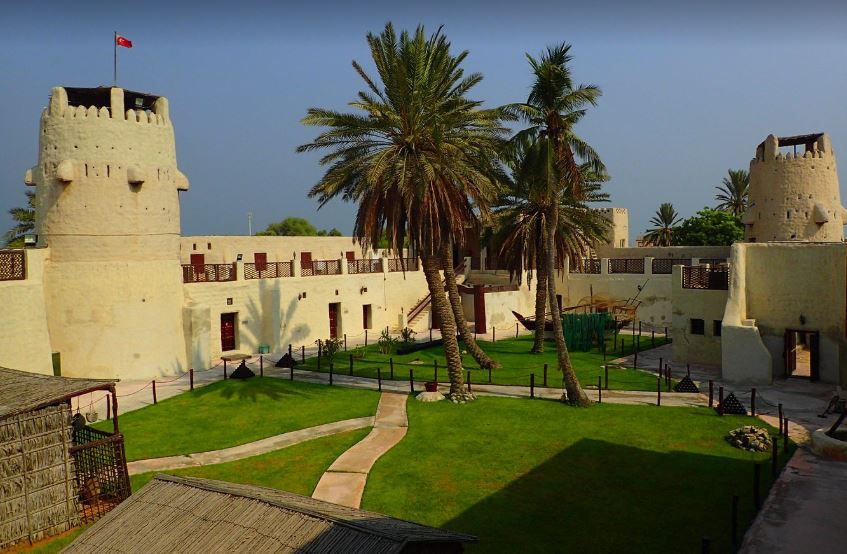
Today, Umm Al Quwain Fort houses exhibits that narrate the emirate’s history, from its maritime traditions and pearling industry to its archaeological discoveries. Artifacts displayed within its rooms include ancient pottery, weapons, jewelry, and tools that shed light on the daily lives of earlier generations. These collections connect visitors with a time when the economy depended heavily on fishing, pearl diving, and trade across the Gulf. Walking through the museum’s galleries, one gains a deeper appreciation for the ingenuity and endurance of the people who once lived and worked within these walls.
Beyond its historical exhibits, the fort plays a vital role in fostering cultural identity. In a nation known for rapid transformation and modern architecture, landmarks like Umm Al Quwain Fort provide continuity with the past. They remind residents and visitors alike that before the era of skyscrapers and highways, communities were built around forts, markets, and the sea. The preservation of such sites underscores the United Arab Emirates’ broader commitment to safeguarding its heritage while embracing progress.
The fort’s setting in the old town enhances its charm. Surrounded by traditional houses and narrow streets, it offers a glimpse into the urban fabric of earlier times. The juxtaposition of the historic structure against the backdrop of contemporary life highlights the dynamic story of Umm Al Quwain itself—a place rooted in tradition yet steadily evolving. In essence, Umm Al Quwain Fort is more than a historic building; it is a living testament to leadership, community, and adaptation. Its enduring presence anchors the emirate’s narrative, linking generations through shared memory and cultural pride.


Comments